Longevity · Explainer
Endothelial Function: The Cardiovascular Biomarker Nobody Measures
The lining of your blood vessels is a single cell thick and predicts cardiovascular events years ahead. It is also where erectile difficulty and cold hands come from.
✓ Medically reviewed by Dr. Justin Houman, MD, Board-Certified Urologist, Cedars-Sinai
Dr. Houman is a co-formulator of JOYMODE Hard+, a product reviewed on this site.
Blood pressure, ApoB and HbA1c are the numbers you can put on a chart. Endothelial function is the one underneath them, it predicts events years before the others move, and almost nobody has it measured.
It is also the biomarker that connects two things men rarely file together: cardiovascular risk and sexual performance.
What the endothelium is
The endothelium is the single-cell-thick lining of every blood vessel in your body — roughly a tennis court of surface area if you flattened it out. It is not passive plumbing. It is an active organ that regulates vascular tone, clotting, inflammation and permeability.
Its main tool is nitric oxide. Healthy endothelium senses blood flow and releases nitric oxide, which relaxes the smooth muscle in the vessel wall so the vessel widens. That is the same mechanism behind an erection and behind how your muscles get blood during exercise.
Endothelial dysfunction — reduced nitric oxide availability, impaired dilation — is the earliest measurable step in atherosclerosis. It appears before plaque, before a raised blood pressure reading, and before any symptom.
Why it is the leading indicator
The sequence in most cardiovascular disease runs roughly: endothelial dysfunction → arterial stiffening → plaque formation → clinical event.
Measure blood pressure and you catch step two. Measure ApoB and you are estimating the fuel for step three. Endothelial function is step one, which is why it carries independent prognostic value for cardiovascular events even after adjusting for conventional risk factors.
The catch is measurement.
How it is measured, and why you probably cannot
Flow-mediated dilation (FMD) is the research standard — an ultrasound of the brachial artery, a cuff inflated to occlude flow for five minutes, then measurement of how much the artery dilates on release. Non-invasive, well validated, operator-dependent, and largely confined to research settings.
Peripheral arterial tonometry (EndoPAT) is the commercial version — fingertip probes, a reactive-hyperaemia index. Available at some preventive-cardiology and longevity clinics.
Pulse wave velocity measures arterial stiffness rather than endothelial function directly, but it is related, increasingly available, and cheaper.
Realistically, most people will not get a direct measurement. Which makes the proxies matter.
The proxies you already have
Blood pressure is the most useful. Rising blood pressure reflects, in part, impaired vasodilation. It is the free measurement that best tracks the underlying problem — measure it properly.
Exercise capacity. VO2 max depends on delivering blood to working muscle, which depends on endothelial responsiveness.
Cold hands and feet, when new rather than lifelong. Peripheral vasoconstriction.
Erectile function. This is the proxy men have and do not recognise as one.
That last point is the one worth acting on. New or progressive erectile difficulty in a man in his forties or fifties is a reason to get cardiovascular risk assessed — bloodwork, blood pressure, glucose. Not a reason to quietly buy a supplement and wait.
What improves it
The interventions are conventional and the effect sizes are real.
Aerobic exercise is the best-established. It improves FMD measurably, and it does so within weeks.
Stopping smoking. Smoking is directly toxic to the endothelium; cessation improves function relatively quickly.
Glycaemic control. Hyperglycaemia impairs nitric oxide availability, which is a large part of why diabetes is a cardiovascular disease.
Weight loss and reduced visceral fat.
Sleep. Short and fragmented sleep impairs endothelial function in controlled studies.
Dietary nitrate — leafy greens and beetroot — feeds the nitrate–nitrite–NO pathway, which is a route to nitric oxide independent of the endothelium's own enzyme. Small, reproducible blood-pressure reductions in trials.
Statins, where indicated, improve endothelial function beyond their lipid effects.
Where supplements fit
Modestly, and specifically.
Two ingredients have controlled human data on endothelial endpoints. Vitamin C improved flow-mediated dilation by roughly 25% over four weeks (PubMed 9631871) — nitric oxide is destroyed by oxidative stress, and this protects it. L-citrulline raises plasma arginine, the substrate for nitric oxide synthesis, more effectively than arginine itself, and daily supplementation over weeks is what the trials measured.
Daily nitric oxide supportWe own this
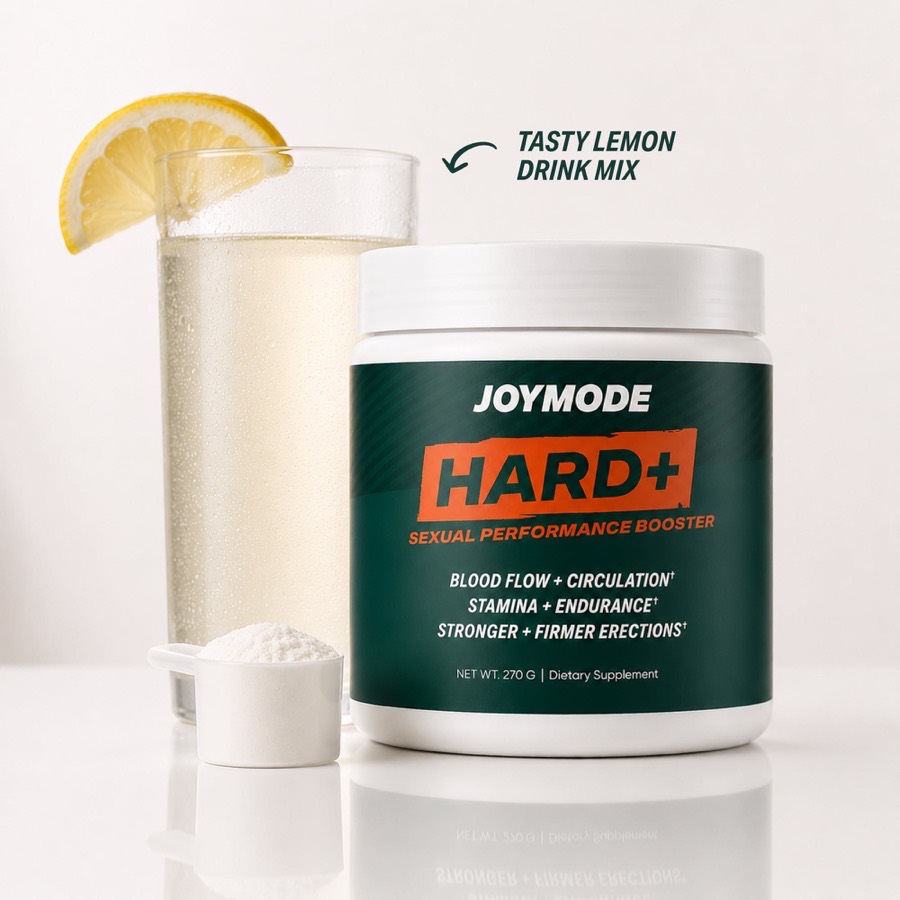
JOYMODE Hard+
Built for erectile function, but the mechanism it targets is endothelial. 4 g of citrulline plus a separate nitrate pathway plus vitamin C to protect what is produced. Daily, like creatine — every trial cited here dosed daily over weeks.
- Price
- $84.99 / 30 servings
- Dose
- 4,000 mg L-citrulline · 2,500 mg arginine nitrate (NO3-T®) · 300 mg Panax ginseng · 100 mg vitamin C
Two honest caveats. These are ingredient-level results on surrogate endpoints — improved dilation on an ultrasound, not fewer heart attacks. No supplement has been shown to reduce cardiovascular events through this pathway. And the free interventions above have larger effects than anything in a sachet.
A blood-flow supplement is a reasonable addition once exercise, sleep, glucose and blood pressure are handled. It is a poor substitute for them, and anyone selling it as the primary intervention has the order backwards.
Not medical advice. New or worsening erectile difficulty is a reason to see a doctor, not to self-treat.